We need to have a serious, zero-filter conversation about The Red Sleeve.
We spent sixteen straight episodes staring at our screens, our chests tighten as we practically screamed at the drama gods for Sung Deok-im to yield to Crown Prince Yi San. We wanted the grand confession. We wanted the royal decree. We wanted the sweeping, high-voltage romance where the King of Joseon claims the woman he’d risk his throne to protect.
But when Episode 15 hit and she finally said yes, our hearts didn’t soar. We didn’t feel a burst of butterflies as we kicked our legs frantically like a love overdosed schoolgirl. Instead…. Our hearts violently shattered.
Why? Because The Red Sleeve pulled off one of the most psychologically mature, structurally brave, and devastatingly real character studies in Hallyu history.
In almost every traditional sageuk or historical romance, becoming the King’s concubine is framed as the ultimate fairy-tale upgrade. You get the silk robes, the private courtyard, the elevated status, and the “undivided devotion” of the most powerful man in the nation. But Deok-im looked past the golden luster and saw the palace walls for what they truly were. A high-security, gilded prison.
Today, we’re opening The K&C Vault as we take a peek into the psychological, historical, and cinematic brilliance of Sung Deok-im—and why her relentless resistance was the ultimate act of female self-preservation.

1. Deconstructing the Myth: Why the Concubine Trope is a Psychological Trap
To understand Deok-im’s terror of the royal court, we have to unlearn the classic romantic tropes that tv has conditioned us to accept.
In mainstream media, love is often presented as the ultimate equalizer. We want to believe that if a King loves a court maid enough, his love can erase the power imbalance between them. The Red Sleeve aggressively rejects this illusion.
The Illusion of “Special Privilege”
When Yi San offers Deok-im a place by his side, the court views it as an unfathomable gift. To the world, she is being elevated from a nameless servant to royal nobility. But Deok-im understands the psychological fine print:

As a court maid, Deok-im is an active participant in her life. She earns her own living, she can enjoy life outside the palace, refine her calligraphy, craft stories that move audiences, and navigate palace politics with sharp tactical intellect. The moment she becomes Royal Noble Consort Ui, her autonomy is legally stripped. She is no longer permitted to work, create, or act by her own free will. Her sole purpose shifts to waiting and reproducing.
In a normal dynamic, love is built on reciprocal choice—two people actively choosing each other every day. But when a King demands your heart, no is treason, and yes is mandatory. Deok-im’s “no” was a serious act of bravery and courage. Rejecting the King’s “right” to claim her was her way of choosing not to submit to a system designed around absolute submission and control.
2. The Anatomy of Autonomy: What Deok-im Stood to Lose
Deok-im’s resistance was never about pride or stubbornness; it was a calculated inspection of what her freedom was worth.
A. Her Purpose & Intellect
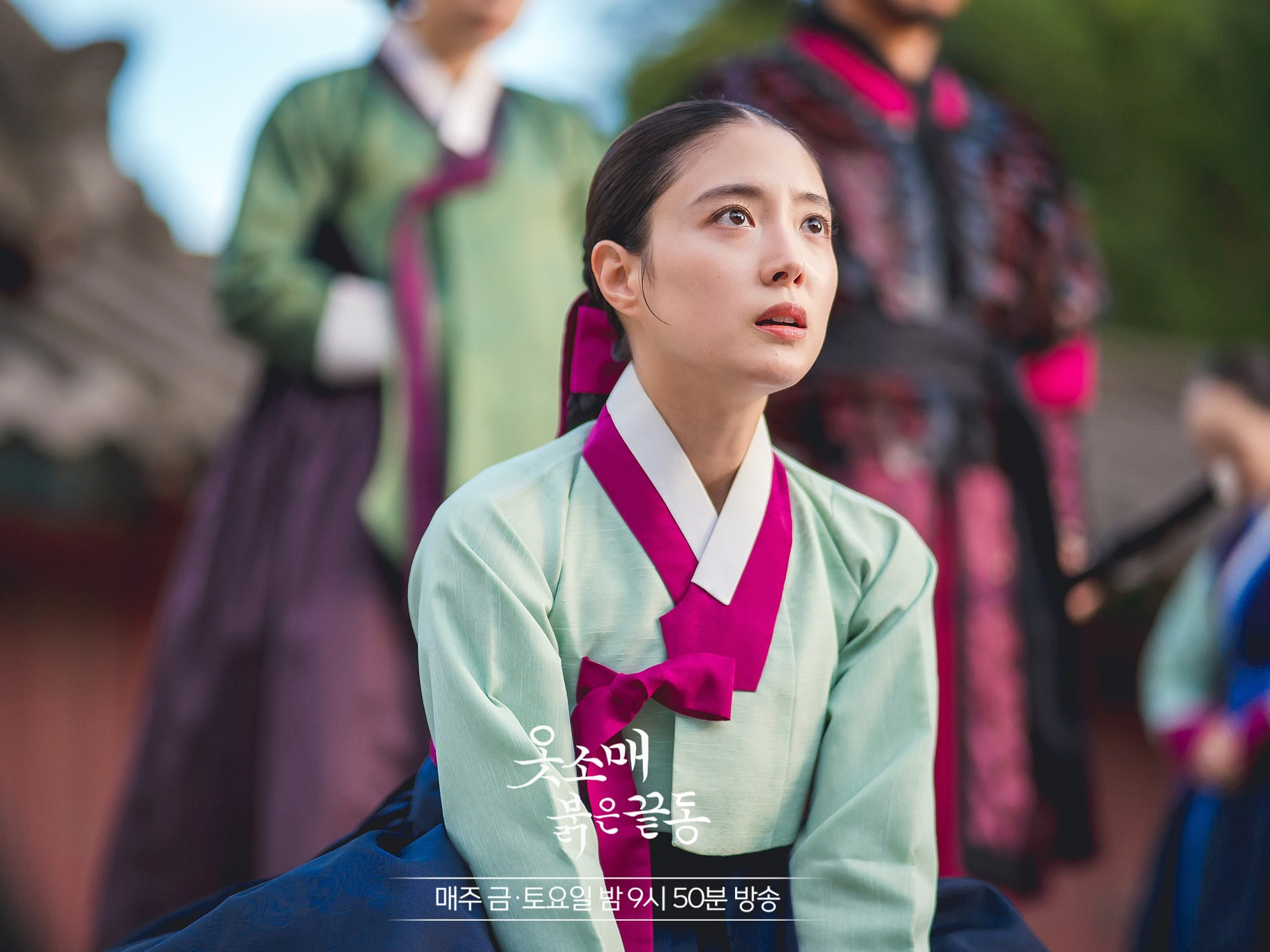
Deok-im was not just a romantic lead; she was a brilliant scholar in her own right. Her mastery of calligraphy was so legendary that she was hand selected to transcribe core texts for the royal family. She possessed a sharp political mind—frequently decoding complex palace conspiracies and outsmarting corrupt courtiers long before the King’s guards even realized a threat existed.
In her normal life, her mind was her weapon and her pride. But inside the inner court of Joseon, an intellectual woman is viewed as a threat or a nuisance.
This brings us straight to a heavy psychological survival tactic: mothballing.
In psychology, mothballing is the intentional, temporary preservation of an identity or a major life goal by putting it completely on ice—with the desperate, deep down promise to yourself that you’re going to dust it off and revive it later when the coast is clear.
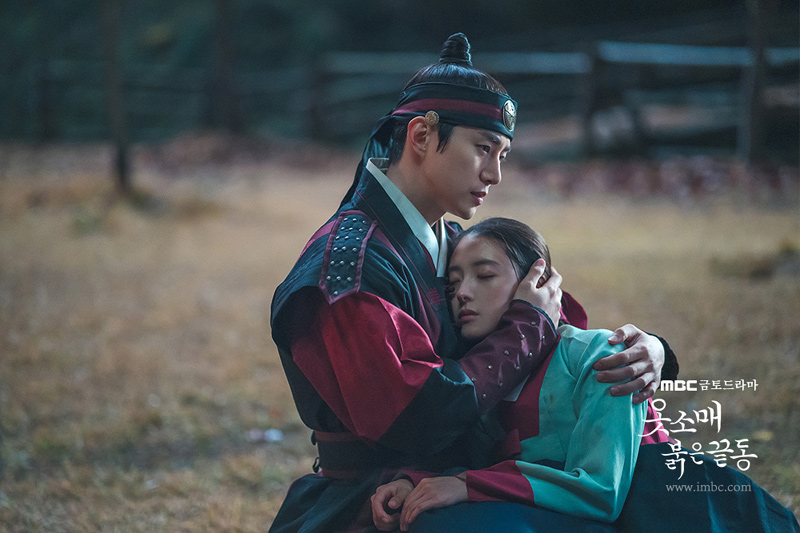
When Deok-im finally accepted Yi San’s proposal, she wasn’t just giving in to romance; she was psychologically mothballing her true self. Deep down, she likely held onto a fierce, quiet hope that she could bend the rules of the palace, protect her autonomy, and eventually find a way back to her books, her friends, and her freedom. She packaged up her identity and put it on a high shelf, fully intending to bring it back out when the political storm cleared.
The true tragedy of The Red Sleeve isn’t just the heartbreak, it’s watching that fragile hope get chipped away, piece by agonizing piece, as she was forced to confront the crushing reality of life as a royal concubine.
B. The Court Maid Sisterhood (Her True Emotional Anchor)
We cannot talk about Deok-im’s heroism without talking about Bok-hee, Kyung-hee, and Young-hee.
In a Joseon palace where women were treated as expendable instruments of dynasty, these four women built a sacred sanctuary. They shared cheap meals, giggled in pajama-clad secrecy, made fun of arrogant officials, and swore a pact to grow old together as independent court maids.
Although it’s definitely worth the watch, The Red Sleeve is the saddest kdrama I’ve ever watched so far. The tragedy and yearning is palpable. Deok-im didn’t just lose her freedom; her elevated title forced her best friends to bow to her as a superior. The system systematically murdered the only genuine emotional safety net she had.
3. The Paradox of Loving a King: “You Belong to the Nation, But I Only Belong to Myself”
Here is the core tragedy that Lee Jun-ho and Lee Se-young portrayed with such exquisite, crushing precision: Deok-im did not reject Yi San because she lacked feelings for him. She rejected him because she loved him so deeply she knew it would destroy her.
The Green Flag in a Red Crown
Yi San is, by all modern standards, a grand-tier male lead. He reveres Deok-im’s intellect. He doesn’t want her merely for her body; he craves her soul. He is a king who genuinely cares about his people and he looks at Deok-im like she is the center of his universe.
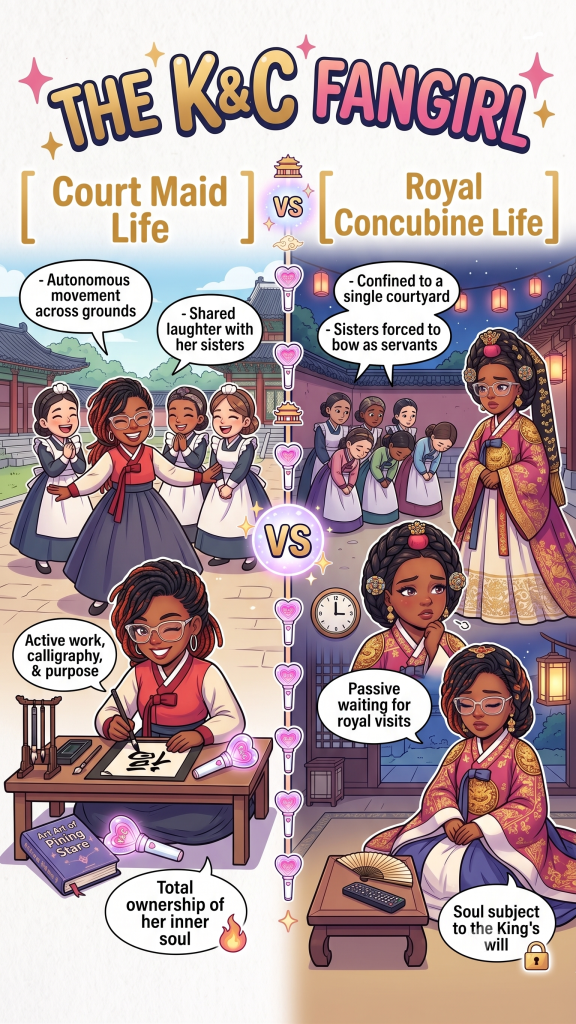
When he corners her in the royal library, trapping her against the wooden bookshelves while his breath trembles with a mix of royal authority and desperate vulnerability, he isn’t trying to bully her. He is a lonely, traumatized man begging to be loved for who he is (on a soul level), not by the title he wears.
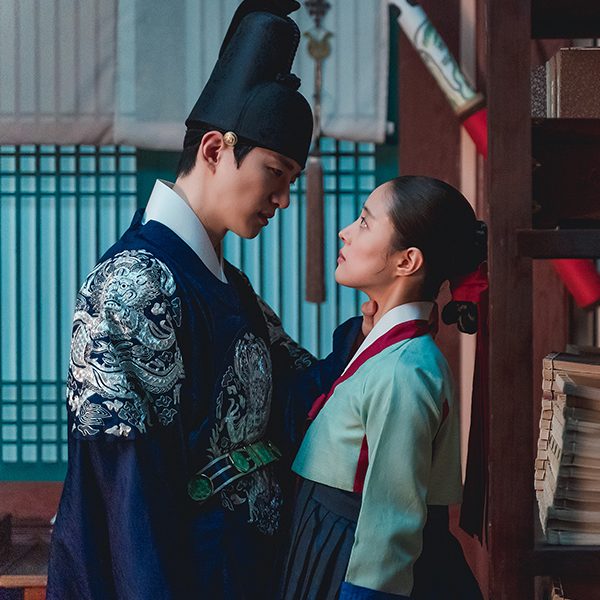
“We love a devoted Crown Prince, but when his version of “I love you” requires you to surrender your personal security, your freedom, and your besties… we HAVE to pause and do a Vault Safety Inspection!”
But Yi San is bound by the crown. His time, his body, his choices, and his future belong to the Joseon Dynasty.
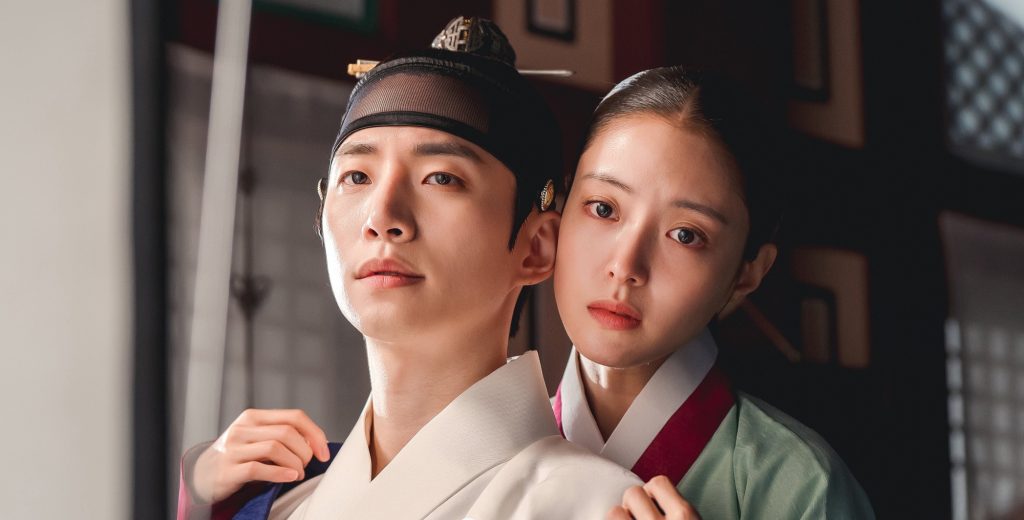
When Yi San falls in love, he can demand that Deok-im give him her entire world. But when Deok-im loves Yi San, she only gets a fraction of his time—whatever small window remains after he finishes governing a nation, satisfying his political advisors, and bedding state-mandated wives to secure the royal bloodline.
Deok-im saw this math clearly: She would have to give 100% of her soul to a man who could only give her 10% of his life. Her resistance was a desperate, heroic attempt to protect her heart from starving to death in the quiet corners of the inner palace.
4. Cinematic Analysis: How Framing and Visuals Told the Real Story
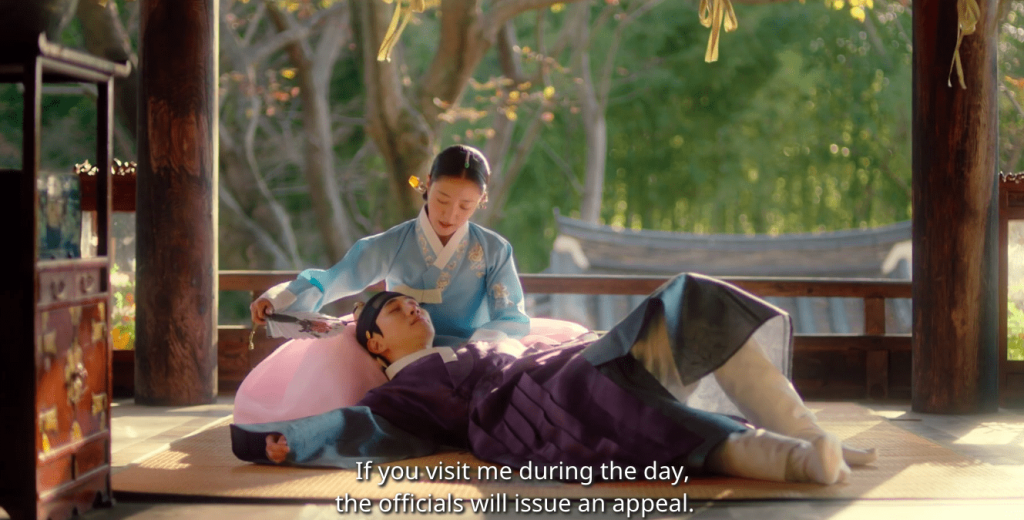
The direction in The Red Sleeve deserves its own museum exhibit. The director used color theory, lighting, and spatial framing to visually document Deok-im’s slow psychological confinement.
The Library vs. The Courtyard (Light & Shadow)
In the early episodes, Deok-im is constantly framed near open windows, bathed in warm, natural sunlight. The library scenes with Yi San are filled with high visual tension, but the space feels alive—books scattered, sunlight streaming through wooden slats, air flowing freely.
The Threshold of the Palace “Prison”
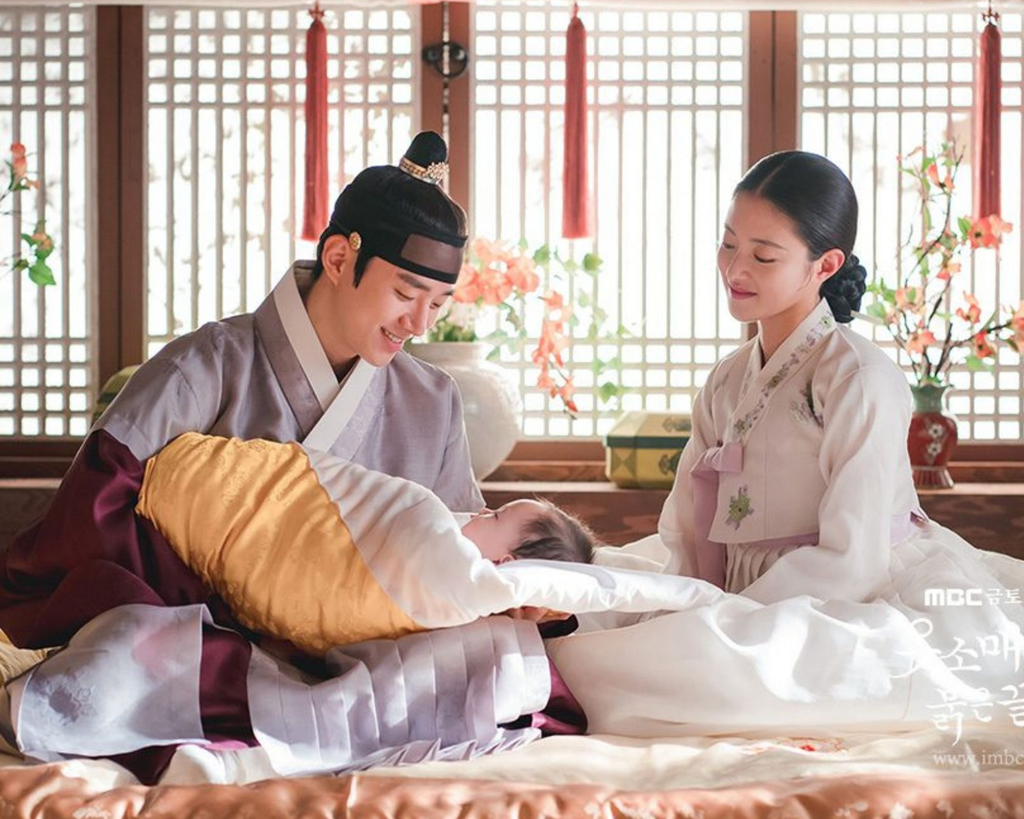
Once Deok-im becomes a concubine, notice how the camera shifts:
Deok-im is repeatedly shot through sliding door lattices, window frames, and sheer silk drapes. She is physically separated from the outside world by geometric grids that mimic cage bars.
Towards the end of the series as she sits inside her quiet pavilion, the camera stays outside the doorway. She is static, framed in total isolation while life moves past her outside.
5. The Bittersweet Final Dream: Hallucination or Soul-Bound Liberation?
We cannot analyze Deok-im’s story without talking about the ending that left millions of fans weeping into their pillows at 3:00 AM.
In the final moments of this kdrama, an aging, solitary King Jeongjo dies in his cold royal bed chamber and wakes up back in the sunlit garden of his youth, standing before Deok-im once again. He realizes he is in a dream (or the afterlife), turns away from his royal duty, and chooses to stay in that moment with her forever.

Was it a fever dream of a dying old man or a spiritual reunion?
It is both—and that is why it is brilliant. In life, Yi San could never belong to Deok-im because the crown demanded his absolute devotion. Only in death, when the crown is removed, the palace walls crumble, and state duties cease to exist, can Yi San meet Deok-im as an equal.
In that final garden, she isn’t a concubine locked in a court, and he isn’t a King carrying the weight of a nation. They are simply two souls, finally free to love each other on equal terms outside the golden cage.
The Red Sleeve refused to give us cheap, easy fan service. It handed us a historical masterpiece that respected its heroine enough to let her voice the silent, agonizing cost of historical royal romance.
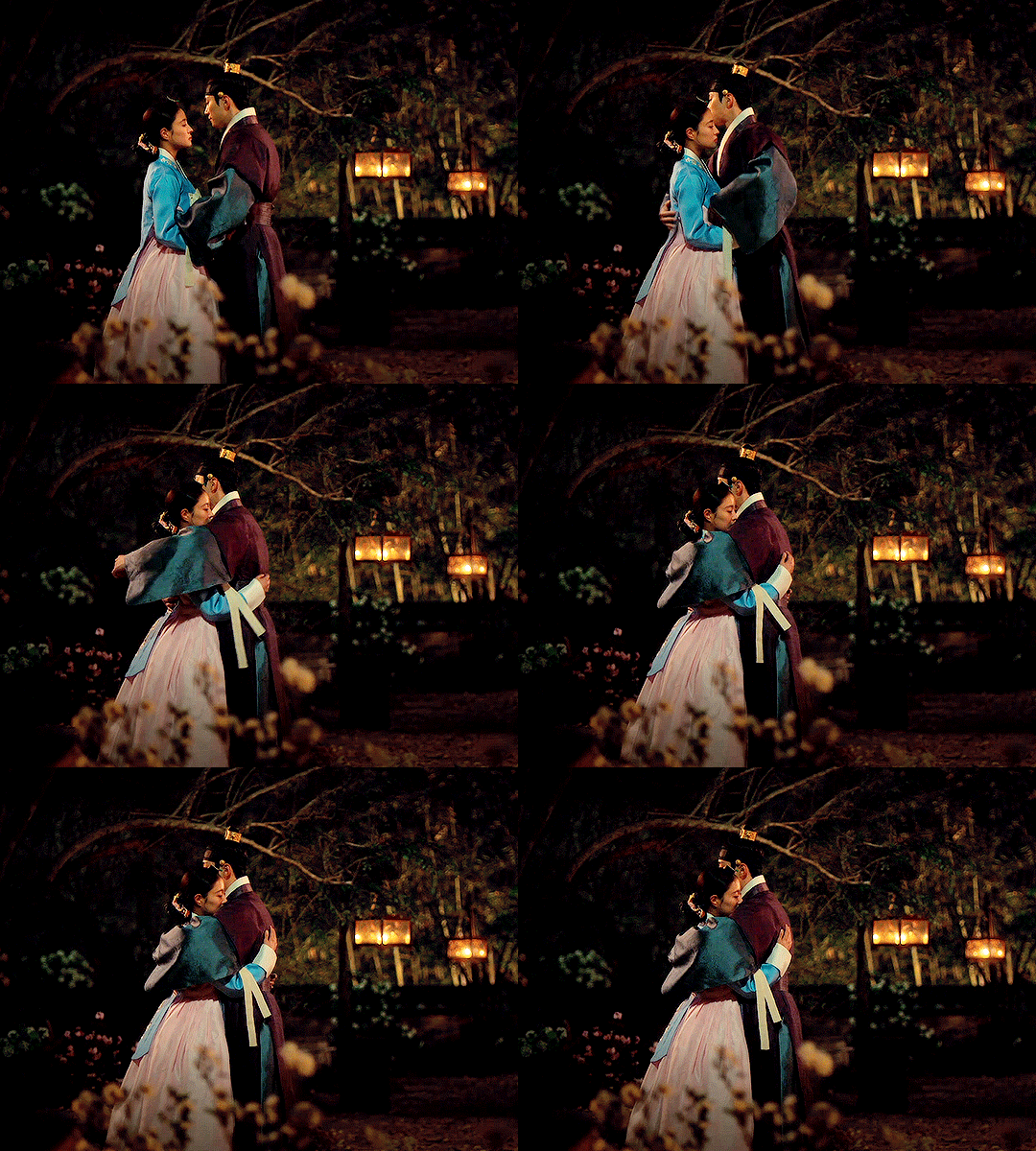
Sung Deok-im didn’t fight Yi San because she was cold or unfeeling. She fought him because she valued her own freedom in a world that tried to treat women as property. And that, my fellow k&c drama fans, is the very definition of elite character writing.
I have to admit, The Red Sleeve gripped me in a way I truly wasn’t expecting. Long after the credits rolled, I found myself sitting in the quiet, genuinely wondering: Would Deok-im have lived a longer, happier life if she had never crossed paths with Yi San?
Lee Jun-ho and Lee Se-young gave us an absolute masterclass in acting. The raw tension, the suffocating frustration, and the profound, aching love between Yi San and Deok-im felt so real it almost hurt to watch. Seeing a love that fierce end so quickly and tragically leaves a weight on your chest that doesn’t just disappear.
💬 Let’s Spill the Tea in the Comments!
I’m passing the mic directly to you:
- Looking back at her journey, do you view Deok-im’s initial rejections as self-preservation, or do you think she should have given in sooner to enjoy her time with Yi San?
- Which specific micro-expression or line of dialogue between Jun-ho and Se-young made you realize this drama was going to crush you emotionally?
- If you were in Deok-im’s shoes in Joseon-era Korea, would you have chosen personal autonomy with your besties, or stepped into the golden cage for a love that comes once in a lifetime?
Let’s spill the tea down below! Remember to keep your iced coffee cold, your subtitles on, and your standards sky-high! See you in the next blog post!